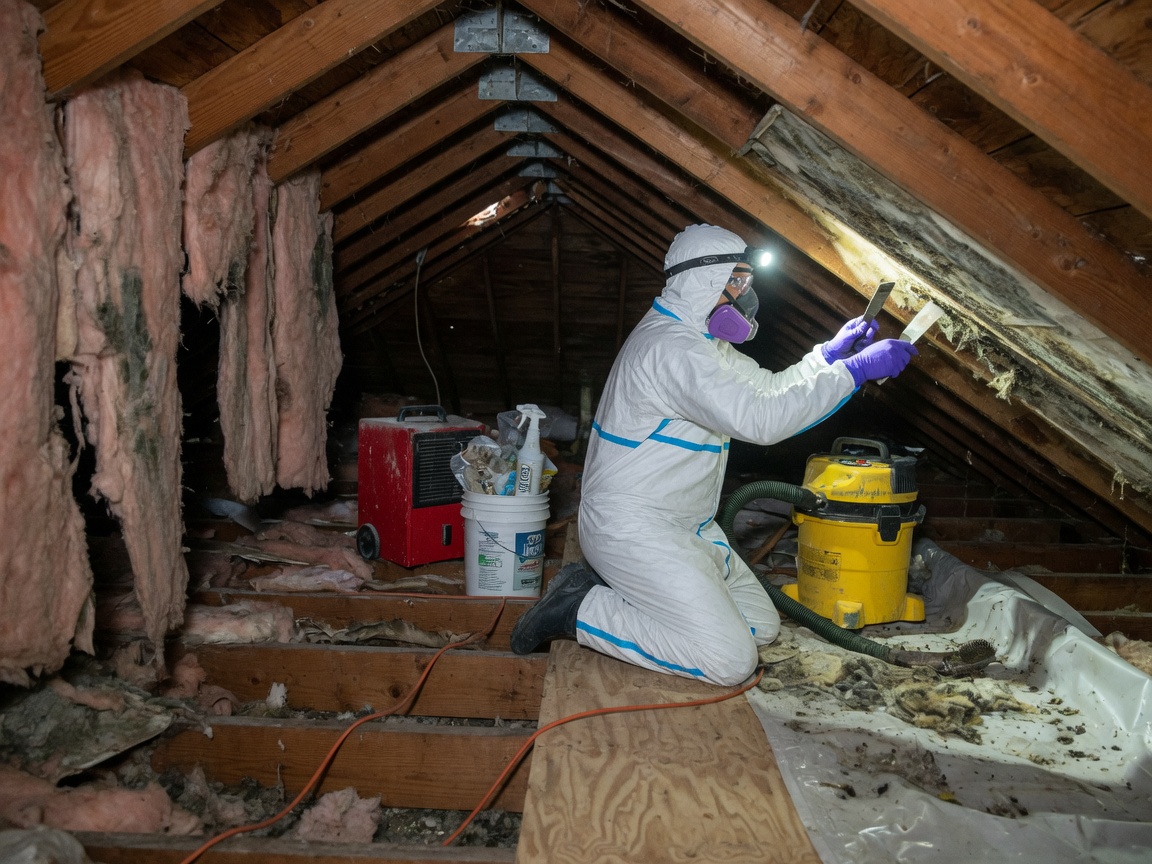
Wilmington's humid subtropical climate drives attic mold through summer condensation on roof decks and poor airflow in older homes. Properties in the Historic District and Downtown Wilmington often feature original rafters and limited soffit vents that trap moisture from the Cape Fear River, allowing growth on sheathing and insulation. Technicians must remove affected fiberglass or cellulose while protecting knob-and-tube wiring common in pre-1960 builds, then improve ridge venting without altering historic exteriors.
Homes near Monkey Junction and Ogden sit on slightly lower terrain that channels afternoon thunderstorms under eaves, pushing humidity into attics during mild winters when residents run heat less. This creates edge cases where mold returns within months if bathroom exhaust fans still vent into the attic space. Remediation includes sealing those ducts and adding insulation baffles to maintain airflow over new material.
Carolina Beach and Wrightsville Beach cottages face salt-laden air that accelerates corrosion on metal fasteners, so crews use stainless hardware during repairs. Post-removal verification focuses on moisture readings below 12 percent before reinstalling insulation, because residual humidity from the nearby Intracoastal Waterway quickly restarts growth.
Technician insight
In Wilmington the thing that catches most people out with Attic Mold Removal is summer condensation pooling on the north side of the roof deck in homes built before 1975 around the Historic District and Monkey Junction; the mild winters keep humidity trapped because residents rarely open windows, so the growth returns fast unless ventilation is fixed at the same time.
Historic District Attic
Owner noticed musty smell in second-floor bedrooms of a 1920s home near the Riverwalk. Inspection found black growth on north-facing rafters from blocked soffit vents and bathroom fan venting into the attic. Crew removed insulation, treated rafters, added ridge venting, and sealed the duct; moisture stayed under 10 percent on follow-up checks.
Attic Mold Removal Services We Offer
✓Attic Mold Inspection
Detailed visual and moisture-meter survey of rafters, sheathing, and insulation in Wilmington attics to locate hidden growth before removal begins.
✓Insulation Removal and Replacement
Safe extraction of contaminated fiberglass or cellulose followed by installation of new material rated for New Hanover County's humidity levels.
✓Attic Ventilation Upgrades
Addition of ridge vents and baffles to improve airflow in older homes across the Historic District and Monkey Junction without changing exterior appearance.
✓Moisture Source Correction
Sealing bathroom exhaust ducts and roof leaks that allow Cape Fear River humidity to enter attics in Downtown and Ogden properties.
✓Post Remediation Clearance Testing
Independent moisture and air sampling after cleaning to confirm mold levels meet safe standards before homeowners return to the space.
Attic Mold Removal Cost in Wilmington, NC
| Service | Typical Range | What Affects It |
|---|---|---|
| Small Attic Treatment | $900–$1600 | Under 800 sq ft with light surface growth |
| Standard Attic Remediation | $1800–$3200 | Typical 1950-1980 home in New Hanover County |
| Insulation Removal Add-On | $600–$1100 | Cellulose or fiberglass disposal and replacement |
| Ventilation Upgrade | $450–$850 | Ridge vent and baffles in Historic District homes |
Ranges are typical for Wilmington, NC and confirmed with an exact written quote before any work starts.
How it works
- 1
Site Assessment
Technician inspects attic access, measures moisture on sheathing, and identifies ventilation shortfalls typical in pre-1980 Wilmington homes.
- 2
Containment Setup
Plastic barriers and negative-air machines isolate the attic from living areas to prevent spores from reaching Historic District interiors.
- 3
Removal And Cleaning
HEPA vacuuming, antimicrobial treatment of rafters, and disposal of affected insulation while protecting wiring common in older New Hanover County homes.
- 4
Prevention And Verification
Install improved venting, replace insulation, then confirm moisture readings stay low before final clearance in beach-area cottages.
Pricing
Costs depend on attic size, insulation depth, and access difficulty in older Wilmington homes; quotes provided during listed business hours.