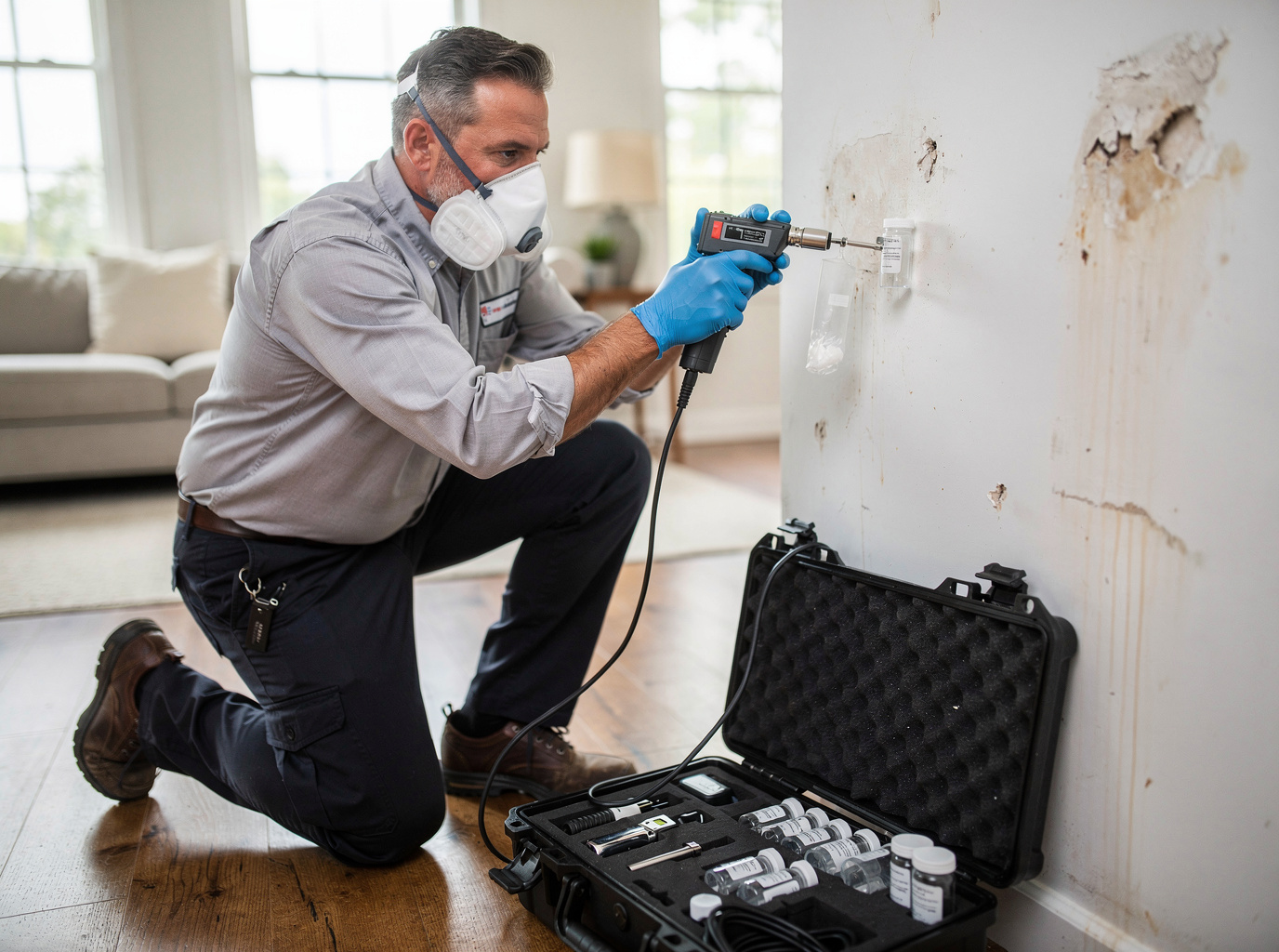
Wilmington's humid subtropical climate drives persistent moisture issues in homes built before 1970, especially in the Historic District where original plaster and crawl spaces trap humidity from the Cape Fear River. Air sampling here must account for seasonal spikes during hot summers that push indoor relative humidity above 60 percent, creating false negatives if tests run only on mild days. Surface swabs from brick foundations or wooden lath often reveal hidden growth missed by visual checks alone.
New Hanover County properties near Wrightsville Beach and Carolina Beach face salt air corrosion on HVAC systems that accelerates mold on ductwork. Testing protocols include multiple outdoor control samples to separate coastal pollen from actual indoor colonies, particularly in slab-on-grade homes in Monkey Junction where poor drainage keeps soil moisture high year-round. Older duct systems in Ogden require borescope inspection before sampling to avoid disturbing settled spores.
Fayetteville commuters with second homes in Masonboro often request clearance testing after roof leaks, where ceiling texture hides growth until humidity from mild winters allows it to spread. Proper protocol calls for wall cavity checks in these cases because vinyl siding traps vapor against sheathing, a common local failure point not seen in drier inland counties.
Testing reports must note exact sample locations and weather conditions at the time because New Hanover building officials review them during resale inspections. Homeowners in Downtown Wilmington frequently discover that one positive air sample near the riverfront triggers full remediation quotes, so precise chain-of-custody documentation prevents over-scoping.
Technician insight
In Wilmington, the thing that catches most people out with Mold Testing is running samples during the first dry spell after a summer rain when river humidity has already driven growth deep into crawl spaces of 1920s brick homes in the Historic District.
Historic District Home After Summer Storm
A 1930s home near the Riverwalk showed musty odors after heavy rain. Air samples near the plaster walls returned elevated aspergillus counts while outdoor controls stayed low. Wall cavity checks confirmed hidden growth behind original lath. Targeted remediation cleared the issue and clearance testing confirmed safe levels.
Mold Testing Services We Offer
✓Air Quality Sampling
Spore trap and culture plate collection from multiple rooms to quantify airborne mold levels in humid Wilmington homes.
✓Surface Swab Testing
Direct sampling of visible discoloration on plaster, wood, or drywall in Historic District properties to identify species.
✓Wall Cavity Inspection
Borescope and sample collection behind walls in older New Hanover County homes where leaks hide from view.
✓HVAC Duct Sampling
Testing of supply and return ducts in beach-area homes affected by salt air and condensation issues.
✓Post-Remediation Clearance
Follow-up air and surface tests after cleanup to confirm levels meet safe thresholds before reoccupancy.
Mold Testing Cost in Wilmington, NC
| Service | Typical Range | What Affects It |
|---|---|---|
| Basic Air Sampling (3–5 samples) | $250–$450 | Higher in multi-story Historic District homes requiring ladder access |
| Surface Swab Panel | $150–$300 | Adds cost when multiple materials or rooms are tested |
| Wall Cavity or HVAC Sampling | $200–$400 | Depends on number of access points needed |
| Post-Remediation Clearance | $300–$550 | Includes comparison to pre-remediation baseline |
Ranges are typical for Wilmington, NC and confirmed with an exact written quote before any work starts.
How it works
- 1
Site Walkthrough
Technician inspects targeted rooms, notes moisture sources, and marks sample locations based on home age and layout.
- 2
Sample Collection
Air pumps, swabs, and tape lifts are used under controlled conditions with outdoor baselines recorded for comparison.
- 3
Laboratory Analysis
Samples ship same day to an accredited lab for spore identification and count quantification.
- 4
Report Delivery
Written findings with photos, species data, and recommendations delivered within 48 hours of lab results.
Pricing
Typical mold testing costs vary by number of samples and property access difficulty; quotes provided during business hours.