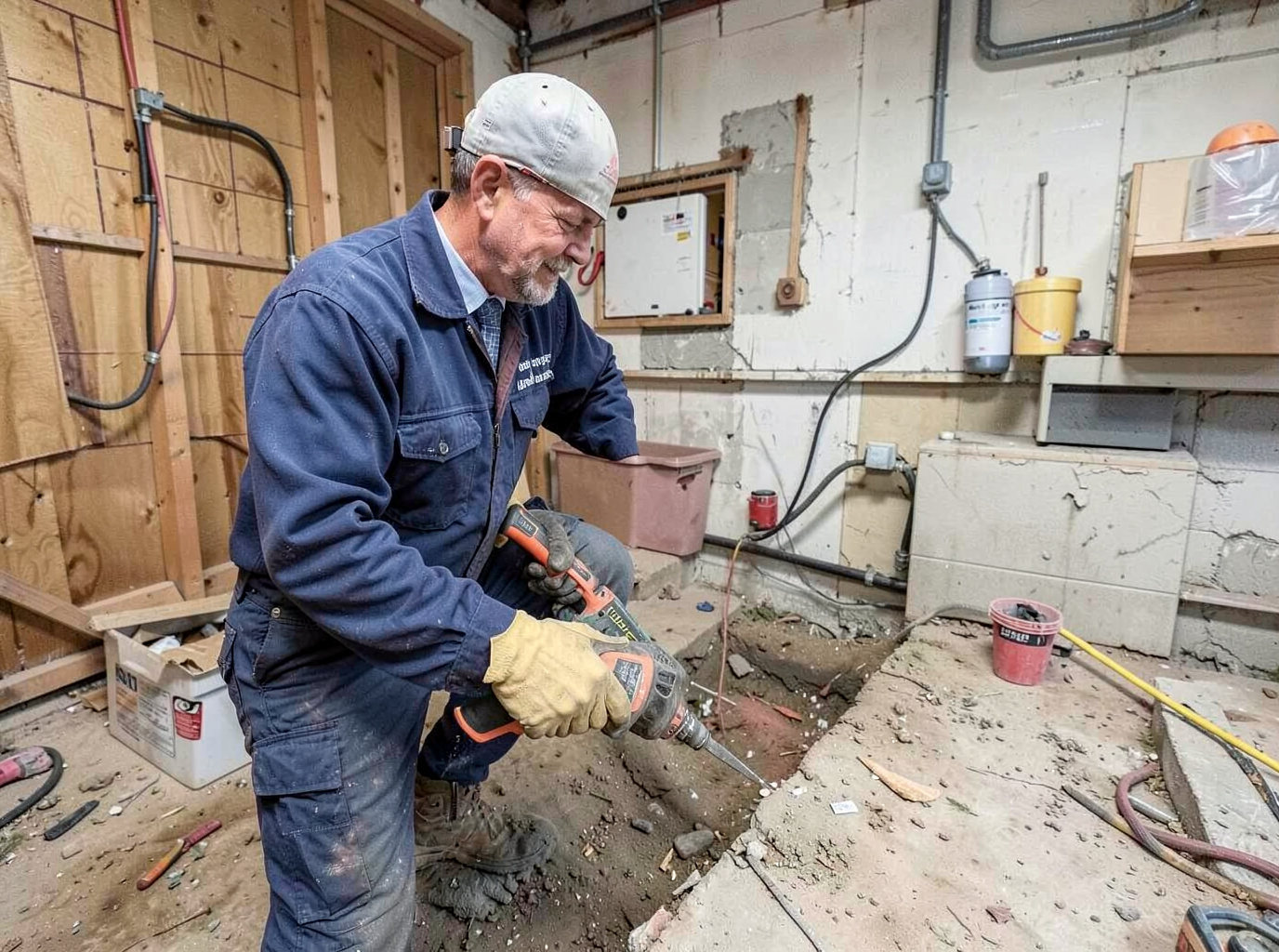
Wilmington's humid subtropical climate keeps crawl spaces under constant moisture pressure, especially in pier-and-beam homes built before the 1970s that dominate the Historic District and Downtown Wilmington. Warm summers drive condensation against cooler soil, while mild winters allow year-round spore activity. Homes near the Cape Fear River or in low-lying sections of Monkey Junction and Ogden often see groundwater seepage that standard vents cannot manage, allowing black mold colonies to form on joists and insulation.
Access challenges vary sharply by neighborhood. Narrow crawl spaces under historic structures require negative-air machines and contained entry points to avoid disturbing settled dust that can migrate into living areas. In contrast, newer builds in Masonboro or near Wrightsville Beach may have taller clearances but still suffer from poor grading that channels roof runoff directly under the structure. We always test for hidden saturation behind HVAC ducts and plumbing runs before any removal begins.
After physical removal we install or repair vapor barriers and add dehumidification tied to the home's existing system. This step is critical in New Hanover County because simply cleaning visible mold without addressing the moisture source leads to rapid regrowth during the next humid spell. Every job ends with a post-remediation walkthrough so homeowners can verify the work before we close the space.
Technician insight
In Wilmington the thing that catches most people out with crawl space mold removal is the combination of old pier-and-beam construction and constant humidity from the river and coastal air. Homeowners in the Historic District often think a few vents are enough, but once the soil stays damp year-round the mold simply moves behind the insulation where you cannot see it until the floors feel soft.
Historic District Home With Hidden Joist Growth
A 1920s home near the Riverwalk had musty odors after heavy spring rains. We found active mold on floor joists fed by a small roof leak that had soaked the ground under the house for months. After contained removal and a new sealed vapor barrier, humidity dropped below 55 percent and the odor disappeared.
Crawl Space Mold Removal Services We Offer
✓Crawl Space Encapsulation
Seals the entire crawl space with heavy-duty liner and dehumidifier tie-in to stop ongoing moisture from Wilmington's humid air.
✓Vapor Barrier Installation
Replaces torn or missing barriers in older homes common in the Historic District to block ground moisture migration.
✓Joist and Subfloor Mold Removal
Targets mold growth on structural wood without damaging load-bearing members in tight-access crawl spaces.
✓Insulation Removal and Replacement
Removes contaminated insulation and installs new material rated for high-humidity New Hanover County conditions.
✓Crawl Space Drainage Correction
Improves grading and adds French drains around homes in low areas like Ogden to reduce standing water under the structure.
Crawl Space Mold Removal Cost in Wilmington, NC
| Service | Typical Range | What Affects It |
|---|---|---|
| Initial Crawl Space Inspection | $175–$350 | Includes moisture readings and photo report; waived if remediation proceeds |
| Basic Mold Removal | $1,200–$2,800 | Visible growth on joists up to 400 sq ft; larger or hidden areas increase cost |
| Vapor Barrier Upgrade | $800–$1,600 | New 12-mil liner plus sealing; price rises with uneven terrain or plumbing obstacles |
| Full Encapsulation With Dehumidifier | $3,500–$6,500 | Complete seal plus unit sized for Wilmington humidity; varies by square footage and access |
Ranges are typical for Wilmington, NC and confirmed with an exact written quote before any work starts.
How it works
- 1
Site Evaluation
Inspect access, moisture levels, and mold extent in the specific crawl space while noting nearby water sources such as the Cape Fear River or poor lot drainage.
- 2
Containment Setup
Isolate the crawl space with plastic sheeting and negative air to keep spores from entering living areas during work.
- 3
Physical Removal
Scrub and HEPA-vacuum affected wood and soil, then dispose of contaminated materials following local disposal rules.
- 4
Moisture Control Installation
Apply vapor barrier, seal vents where needed, and set up dehumidification calibrated to Wilmington's year-round humidity.
- 5
Final Verification
Walk the homeowner through the cleaned space and confirm moisture readings before restoring access.
Pricing
Cost depends on crawl space size, access difficulty, and whether encapsulation is added.