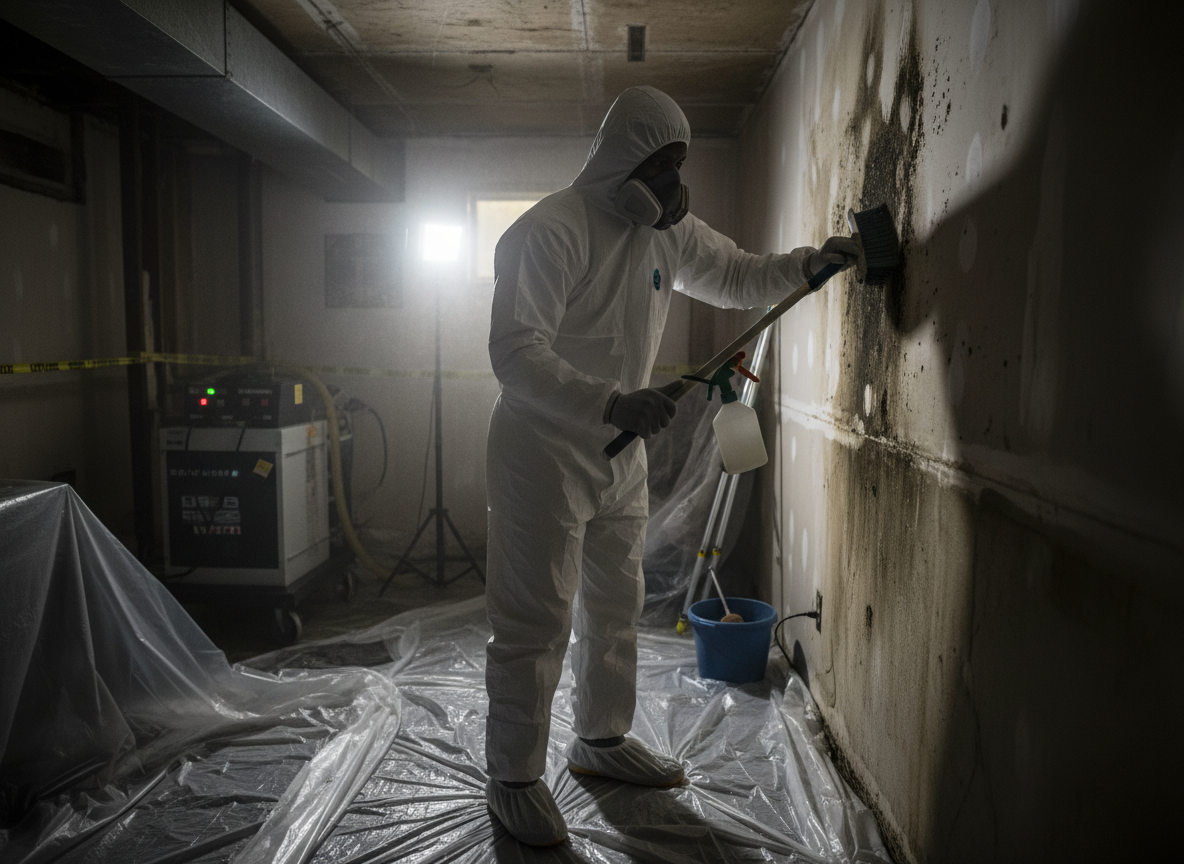
Wilmington's humid subtropical climate brings long hot summers and frequent rain that drives black mold into attics, crawlspaces, and wall cavities of pre-1950 homes common in the Historic District and Downtown Wilmington. Original plaster and heart-pine framing hold moisture longer than modern materials, especially near the Cape Fear Riverwalk where tidal influence keeps soil damp. Technicians must pull baseboards and test behind wallpaper without disturbing lead paint layers typical in these houses.
Properties in Monkey Junction and Ogden often sit on low-lying lots with poor drainage that channels runoff under pier-and-beam foundations. Black mold colonies here frequently hide in subfloor insulation and HVAC returns after summer storms. Containment requires negative air machines exhausting away from neighboring lots, and all debris must be double-bagged before transport through narrow historic alleys.
Near Carolina Beach and Masonboro, salt air accelerates corrosion on metal HVAC components, allowing spores to travel through ductwork into living spaces. Remediation includes fogging coils and replacing flexible duct runs rather than simple surface cleaning. Homeowners in these beach-adjacent neighborhoods are advised to schedule inspections after any roof leak, since mild winters rarely dry out hidden pockets of moisture.
Technician insight
In Wilmington the thing that catches most people out with black mold removal is how the Cape Fear River keeps crawlspace soil damp even in mild winters, so simply running a fan never dries the joists in Historic District homes the way it does farther inland toward Fayetteville.
Hidden Growth Behind Plaster in Ogden
A homeowner noticed musty smell after heavy summer rain. Inspection found black mold in wall cavities of a 1940s pier-and-beam house where river humidity had wicked into original plaster. Crew contained the room, removed affected lath, treated studs, and installed a vapor barrier in the crawlspace before clearance testing passed.
Black Mold Removal Services We Offer
✓Attic Black Mold Remediation
Remove colonies from rafters and insulation in older Wilmington attics where poor ventilation meets summer humidity.
✓Crawlspace Mold Containment
Install vapor barriers and treat joists in pier-and-beam homes common across New Hanover County low-lying neighborhoods.
✓HVAC Duct Mold Cleaning
Clean and sanitize ductwork after black mold travels through systems in riverfront and beach-adjacent properties.
✓Wall Cavity Mold Removal
Open and treat hidden growth behind plaster in Historic District homes without damaging original trim details.
✓Post-Flood Black Mold Treatment
Address rapid growth after storms in areas like Wrightsville Beach and Carolina Beach where water lingers in slab homes.
Black Mold Removal Cost in Wilmington, NC
| Service | Typical Range | What Affects It |
|---|---|---|
| Small localized area (under 10 sq ft) | $650–$1,100 | Higher in Historic District due to tight access and plaster work |
| Attic or crawlspace remediation | $1,400–$2,800 | Varies with insulation type and ventilation issues common near the river |
| Full HVAC duct cleaning add-on | $450–$750 | Required after growth travels through systems in beach neighborhoods |
Ranges are typical for Wilmington, NC and confirmed with an exact written quote before any work starts.
How it works
- 1
Initial Moisture Mapping
Technicians use meters to locate hidden damp areas in attics and crawlspaces typical of Wilmington's older housing stock.
- 2
Containment Setup
Plastic barriers and negative air machines isolate the work zone to prevent spores from reaching adjacent rooms or neighboring properties.
- 3
Source Removal
Affected materials are cut out, bagged, and removed while surfaces are treated with EPA-registered antimicrobials.
- 4
Drying and Clearance Testing
Dehumidifiers run until moisture levels drop, followed by air sampling to confirm the space meets post-remediation standards.
Pricing
Cost depends on square footage, access difficulty in historic homes, and whether HVAC cleaning is required.