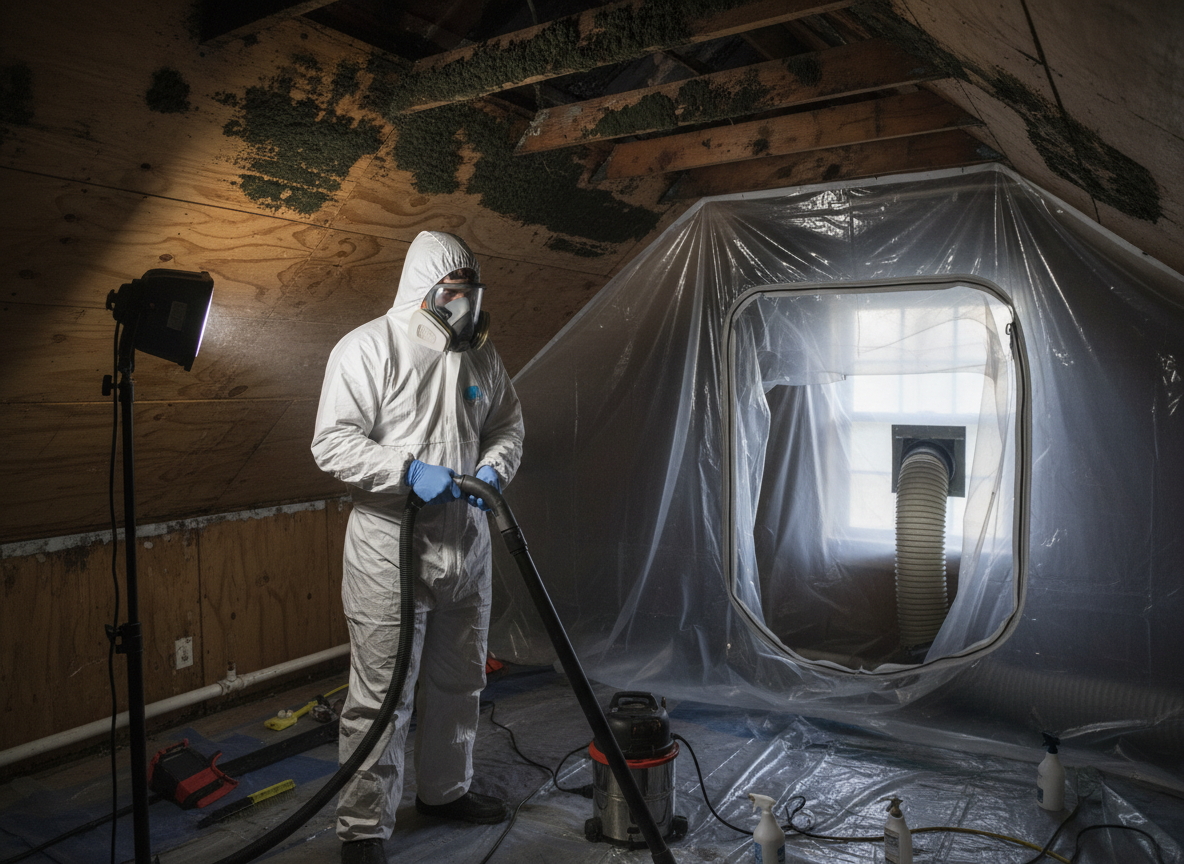
Wilmington's humid subtropical climate drives persistent moisture issues in New Hanover County, especially in older housing stock around the Historic District and Downtown Wilmington. These structures often feature original plaster, lath, and crawl spaces that trap humidity from the Cape Fear River, allowing mold to colonize behind walls and under floors. Remediation here requires isolating HVAC systems early to prevent spores from circulating through ductwork common in pre-1950 builds.
Properties near Carolina Beach and Wrightsville Beach face salt-air corrosion that damages exterior cladding, creating entry points for water during storms. In these coastal neighborhoods, remediation crews must account for elevated moisture readings in masonry foundations and attic sheathing that differ from inland jobs in Ogden or Masonboro. Containment protocols tighten when working near the USS North Carolina Battleship tourist area to avoid impacting adjacent commercial buildings.
Monkey Junction and Fayetteville-adjacent homes frequently show mold in finished basements after heavy rains, where poor grading around slab foundations allows water to pool. Technicians test for hidden growth in insulation and subflooring before any removal begins, because disturbing wet materials without proper barriers can spread spores into living spaces. Local code requires proper disposal of contaminated debris at approved New Hanover County facilities.
Airlie Gardens and Riverwalk properties often involve remediation in mixed-use buildings where commercial and residential spaces share walls, complicating negative-air setups. Crews document pre-existing conditions thoroughly because river humidity can reintroduce moisture within days if dehumidification is not maintained post-removal.
Technician insight
In Wilmington, the thing that catches most people out with Mold Remediation is how quickly river humidity re-wets crawl spaces in pre-war homes along the Cape Fear Riverwalk once dehumidifiers are removed. Older plaster and lath in the Historic District holds moisture longer than modern drywall, so skipping extended drying always leads to callbacks.
Crawl Space Growth After Heavy Rains
A Masonboro homeowner noticed musty odors following summer storms. Inspection revealed mold on joists where grading directed water against the foundation. Crews contained the space, removed affected insulation, treated the wood, and installed a vapor barrier to manage ongoing humidity from the nearby river.
Mold Remediation Services We Offer
✓Black Mold Removal
Addresses Stachybotrys in moisture-prone areas like crawl spaces of Historic District homes where river humidity accelerates growth.
✓Attic Mold Remediation
Targets mold on rafters and insulation in Wrightsville Beach and Ogden homes caused by roof leaks and poor ventilation in the subtropical climate.
✓Crawl Space Mold Treatment
Removes growth under Monkey Junction and Masonboro properties where standing water from heavy rains collects against foundations.
✓Basement Mold Remediation
Handles mold on finished walls in Carolina Beach homes after flooding, including removal of affected drywall and application of antimicrobial coatings.
✓Post-Flood Mold Cleanup
Restores homes in Downtown Wilmington and along the Cape Fear Riverwalk following storm surges that saturate older building materials.
✓Commercial Mold Remediation
Cleans mold in mixed-use buildings near Airlie Gardens while maintaining operations and meeting local health standards.
Mold Remediation Cost in Wilmington, NC
| Service | Typical Range | What Affects It |
|---|---|---|
| Small room remediation | $600–$1,200 | Varies by access and material type in older Historic District homes. |
| Attic treatment | $800–$2,000 | Depends on square footage and insulation removal needs near coastal areas. |
| Crawl space cleanup | $1,000–$2,500 | Higher when standing water requires additional drying time. |
| Post-flood restoration | $1,500–$4,000 | Affected by extent of water damage in river-adjacent properties. |
Ranges are typical for Wilmington, NC and confirmed with an exact written quote before any work starts.
How it works
- 1
Initial Inspection
Technicians assess moisture levels and visible growth in targeted areas of New Hanover County homes using meters and borescopes.
- 2
Containment Setup
Plastic barriers and negative air machines isolate the work zone to prevent spore migration into unaffected rooms.
- 3
Material Removal
Contaminated drywall, insulation, and wood are cut out and bagged for proper disposal at county facilities.
- 4
Cleaning and Drying
HEPA vacuuming and dehumidifiers reduce humidity below 50 percent to stop regrowth in the coastal climate.
- 5
Final Verification
Post-remediation testing confirms clearance before barriers are removed and the space is returned to use.
Pricing
Upfront quotes provided during inspection. Business hours: Mon–Fri 8am–6pm, Sat 9am–2pm.