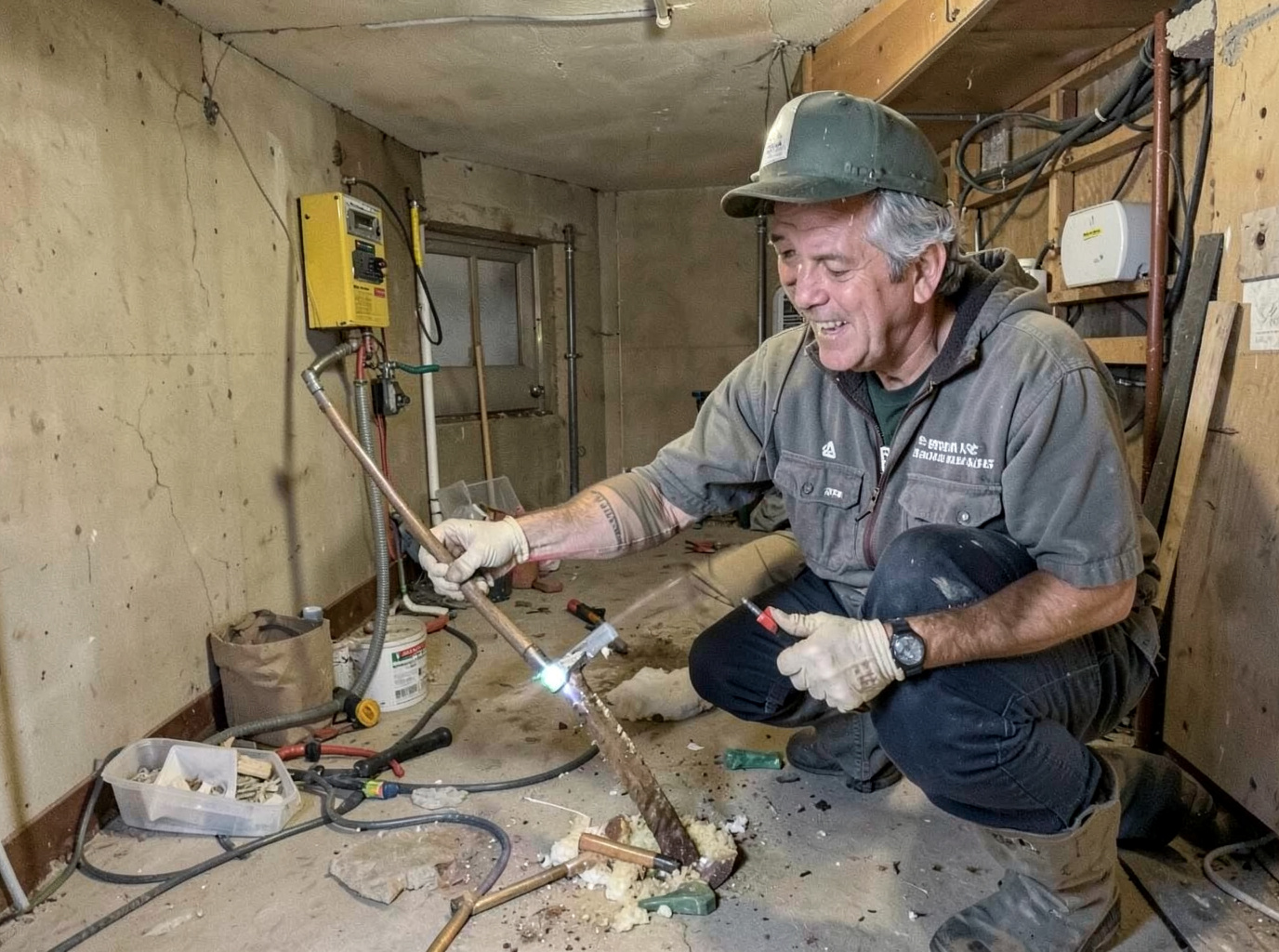
Wilmington's humid subtropical climate brings persistent moisture into basements, especially in homes built before modern waterproofing standards in neighborhoods like the Historic District and Downtown Wilmington. Older brick and crawlspace foundations along the Cape Fear Riverwalk absorb river humidity year-round, while mild winters keep soil damp without freezing cycles that might otherwise dry things out. This leads to hidden growth behind paneling or under stairs that homeowners often miss until musty odors reach living areas.
New Hanover County properties near Monkey Junction and Ogden frequently sit on higher water tables that push moisture through slab cracks after summer storms. Mold remediation here requires isolating HVAC systems to prevent spores from traveling to upper floors, then using negative air machines and HEPA filtration during removal. Post-remediation, we focus on airflow improvements because simply drying the space fails when air from nearby Wrightsville Beach carries extra moisture inland.
Homes close to Airlie Gardens or the USS North Carolina Battleship often have finished basements added decades later without proper vapor barriers. Removing mold in these spaces means cutting back affected drywall or insulation while protecting original wood framing from further damage. We always check for hidden leaks tied to the county's frequent coastal rains before any surface treatment.
Technician insight
In Wilmington, the thing that catches most people out with Basement Mold Removal is the high water table around the Cape Fear River that keeps soil damp under Historic District and Downtown homes even during mild winters when homeowners assume everything has dried.
Historic District Finished Basement
A pre-1950 home near the Wilmington Riverfront showed musty smells after summer rains. We found mold behind added paneling fed by seepage from the elevated water table. Containment and targeted removal preserved the original framing while we added a vapor barrier and drainage. The basement stayed dry through the next wet season.
Basement Mold Removal Services We Offer
✓Crawl Space Mold Removal
Removes mold from under-home crawl spaces common in Ogden and Masonboro homes where river humidity collects and spreads upward.
✓Basement Waterproofing Assessment
Identifies water entry points from the Cape Fear River watershed before mold returns in older Downtown Wilmington foundations.
✓Finished Basement Mold Remediation
Treats mold behind drywall and insulation in remodeled basements without damaging original Historic District woodwork.
✓Dehumidifier Installation
Adds whole-basement units sized for New Hanover County humidity levels to keep moisture below growth thresholds.
✓HVAC Duct Mold Cleaning
Cleans mold from basement-connected ducts that push spores into living spaces in Carolina Beach and Wrightsville Beach homes.
✓Post-Flood Mold Removal
Addresses rapid mold growth after coastal storms in Monkey Junction properties with saturated slab foundations.
Basement Mold Removal Cost in Wilmington, NC
| Service | Typical Range | What Affects It |
|---|---|---|
| Initial basement inspection | $150–$250 | Includes moisture mapping and HVAC check; higher for finished spaces. |
| Crawl space mold removal | $800–$1,800 | Varies with access difficulty and square footage in older homes. |
| Finished basement remediation | $1,200–$3,000 | Driven by wall demolition needs and disposal volume. |
| Dehumidifier supply and install | $600–$1,200 | Unit size and drainage routing affect final cost. |
| Post-remediation clearance testing | $200–$350 | Independent lab report for insurance or real estate needs. |
Ranges are typical for Wilmington, NC and confirmed with an exact written quote before any work starts.
How it works
- 1
Site Assessment
Inspect basement, crawl space, and HVAC for moisture sources tied to local water tables and river proximity.
- 2
Containment Setup
Seal work areas with plastic sheeting and negative air to keep spores from reaching upper floors or neighboring homes.
- 3
Removal and Cleaning
Remove affected materials, HEPA vacuum surfaces, and treat remaining structure with antimicrobial solutions.
- 4
Drying and Verification
Use commercial dehumidifiers and air movers, then test moisture levels before clearance.
- 5
Prevention Recommendations
Install vapor barriers or drainage fixes suited to New Hanover County's soil and rainfall patterns.
Pricing
Cost depends on square footage, depth of growth, and whether finished walls must be opened.