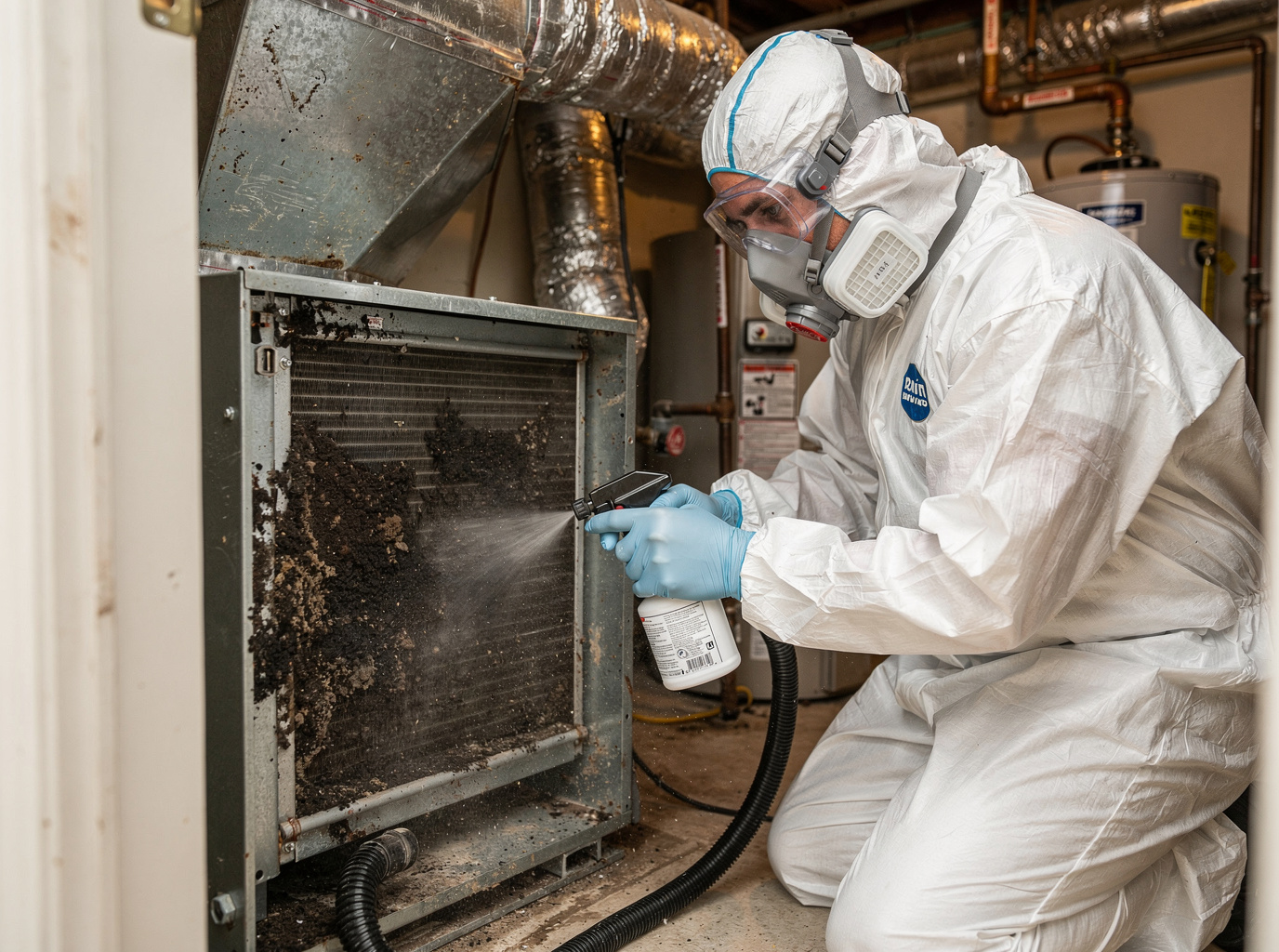
Wilmington's humid subtropical climate keeps indoor HVAC systems damp for much of the year, especially during hot summers when condensation builds on coils and in return ducts. Older homes in the Historic District and Downtown often have original metal ductwork that was never designed for modern sealed systems, creating pockets where mold takes hold behind walls and in attics. In neighborhoods like Ogden and Monkey Junction, newer construction with tight envelopes can trap moisture when the AC runs constantly, pushing spores through supply registers.
Remediation starts with isolating the affected sections of the system so spores do not spread to living spaces. Technicians remove and clean or replace contaminated flex duct and rigid runs, then treat evaporator coils and blower housings with EPA-registered antimicrobials that penetrate biofilm. In riverfront properties near the Cape Fear Riverwalk or Airlie Gardens, salt air accelerates corrosion on metal components, requiring extra attention to prevent future moisture collection points.
After physical removal, the system is balanced and tested to ensure airflow does not reintroduce moisture. Homeowners in Carolina Beach and Wrightsville Beach frequently see issues recur when outdoor units sit in shaded, poorly drained spots; clearing vegetation and improving drainage around condensers reduces the load on the indoor equipment. All work follows current New Hanover County building practices for access and sealing without altering original construction details in historic structures.
Technician insight
In Wilmington, the thing that catches most people out with HVAC Mold Removal is how the constant humidity from the Cape Fear River and nearby Intracoastal Waterway keeps return air moist even during mild winters, especially in 1950s–1970s homes in the Historic District where original ductwork runs through unconditioned attics without proper insulation.
Recurring Musty Odor in Wrightsville Beach Home
A homeowner near the beach noticed musty smells when the AC ran. Inspection found heavy mold on the evaporator coil and in flex duct runs through the attic. We isolated the system, replaced contaminated sections, treated the coil, and improved drainage around the outdoor unit. The odor disappeared and airflow improved without further issues.
HVAC Mold Removal Services We Offer
✓Ductwork Mold Remediation
Removes visible and hidden mold from supply and return ducts in older Wilmington homes where original metal or flex runs trap condensation year-round.
✓Evaporator Coil Cleaning
Treats and restores coils that collect mold in high-humidity conditions common across New Hanover County, restoring efficiency without coil damage.
✓Blower Motor and Housing Treatment
Cleans and disinfects blower assemblies where spores accumulate and get pushed through registers in homes from the Historic District to Ogden.
✓Whole-System Containment and Fogging
Sets up negative air containment around the HVAC unit then applies targeted fogging to reach hidden sections in attics and crawl spaces typical of Carolina Beach properties.
✓Post-Remediation Airflow Testing
Verifies balanced airflow and moisture levels after cleaning so systems serving Wrightsville Beach and Masonboro homes do not reintroduce humidity.
HVAC Mold Removal Cost in Wilmington, NC
| Service | Typical Range | What Affects It |
|---|---|---|
| Initial HVAC Inspection | $175–$275 | Includes borescope and moisture mapping; higher in multi-story Historic District homes with limited attic access. |
| Duct Section Replacement | $400–$900 | Per run; varies with length and whether work is in crawl spaces common in Monkey Junction. |
| Coil and Blower Cleaning | $350–$650 | Covers treatment of evaporator and blower; increases if heavy biofilm requires multiple applications. |
| Full System Containment and Fogging | $250–$450 | Required when mold is widespread; lower for single-zone systems in newer Ogden homes. |
Ranges are typical for Wilmington, NC and confirmed with an exact written quote before any work starts.
How it works
- 1
System Inspection
Technicians examine ducts, coils, and the air handler using borescopes and moisture meters to map mold locations without opening walls unnecessarily.
- 2
Containment Setup
Plastic barriers and negative air machines isolate the HVAC system from living areas to prevent spore migration during removal.
- 3
Physical Removal and Treatment
Contaminated duct sections are removed or cleaned, coils are treated, and antimicrobial solutions are applied to all affected surfaces.
- 4
Restoration and Verification
New or cleaned components are reinstalled, the system is tested for proper airflow, and clearance sampling confirms mold levels have returned to normal.
Pricing
Upfront quotes after on-site inspection; final cost depends on system access, extent of contamination, and whether duct replacement is required.