2026-09-25 ·
Reducing Summer Humidity in Wrightsville Beach Homes
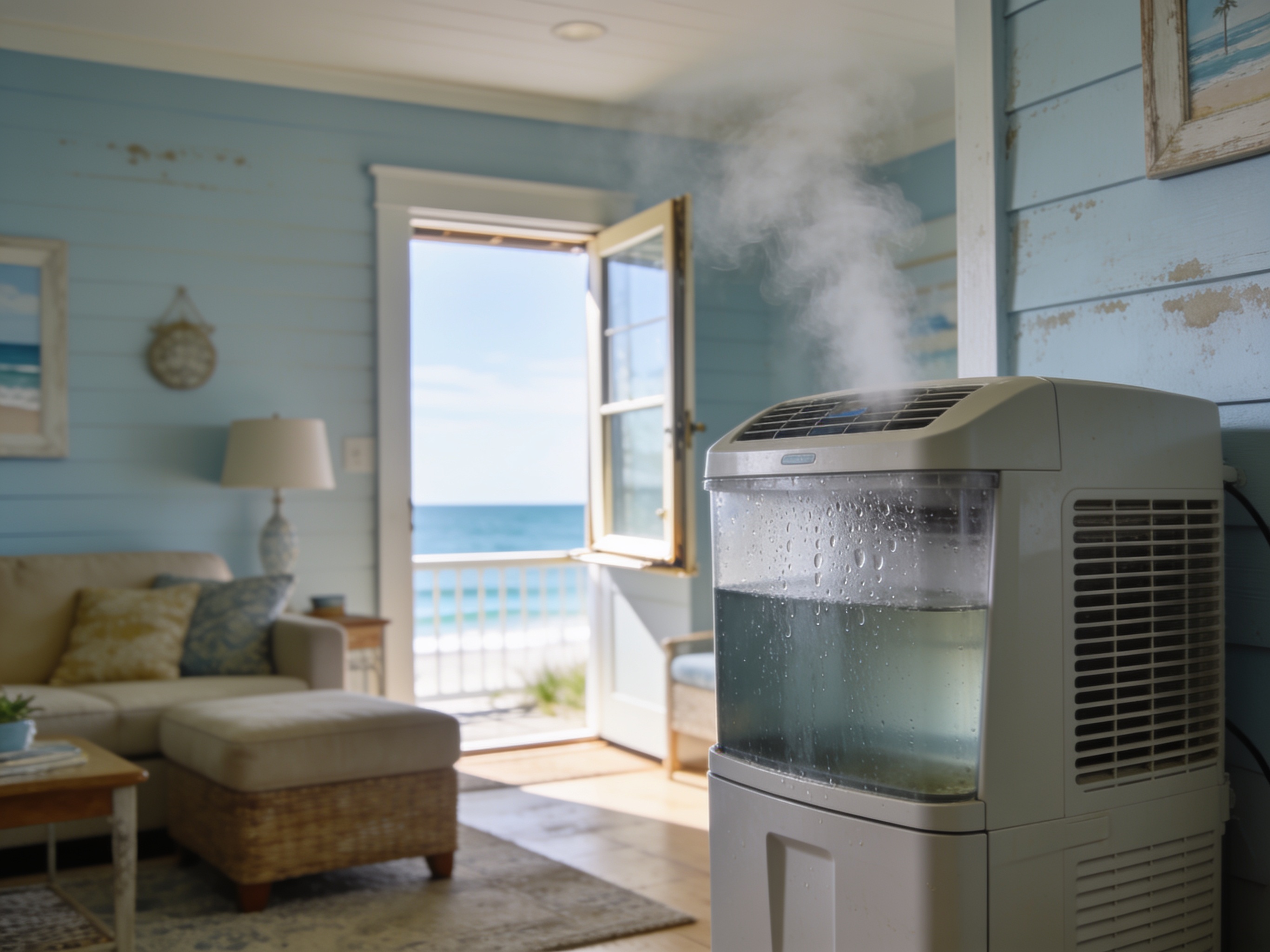
To reduce summer humidity in Wrightsville Beach homes, target indoor relative humidity between 40% and 50% through ventilation upgrades, dehumidifiers sized for 50-70 pint daily capacity, and sealing of moisture entry points; this range limits mold spore activation in the region's hot, humid summers.
Monitoring Humidity Levels
Install digital hygrometers in living areas, bedrooms, and crawl spaces to track readings twice daily during peak summer months. Wrightsville Beach properties near the ocean often see outdoor humidity above 80% from June through September, driving indoor levels higher when windows stay open. Record daily averages and note spikes after rain or high tide events along the Cape Fear Riverwalk area. When readings exceed 55% for more than two consecutive days, run supplemental dehumidification immediately. Consistent monitoring reveals patterns tied to local weather and helps prioritize fixes before visible condensation appears on windows or ductwork.
Improving Airflow and Ventilation
Cross-ventilate homes by opening windows on opposite sides during cooler morning hours before 10am, then close and seal by midday. Install or upgrade bath exhaust fans rated at 80-100 CFM with timers set for 20 minutes after showers. Kitchen range hoods vented to the exterior prevent steam buildup from cooking. In attics, ensure ridge and soffit vents remain clear of insulation debris to promote natural stack effect airflow. These steps move moist air out before it condenses on cooler surfaces common in Wrightsville Beach construction. Avoid relying solely on whole-house fans without dehumidification, as they can pull in additional outdoor moisture during afternoon sea breezes.
Using Dehumidifiers Effectively
Place standalone dehumidifiers in high-moisture zones such as laundry rooms and ground-floor living spaces, emptying collection tanks or routing drains to exterior lines. Set units to maintain 45% RH and clean coils monthly to sustain performance. Central HVAC systems benefit from regular filter changes every 30 days during summer and coil cleaning to prevent restricted airflow that raises humidity. In homes near Wrightsville Beach, pairing a whole-home dehumidifier with existing AC often achieves better control than AC alone because standard cooling cycles short-cycle in mild shoulder seasons. Track energy use and condensate output weekly to confirm the equipment matches the home's square footage and local load.
Addressing Common Moisture Sources
Inspect and repair roof flashing around chimneys and skylights before summer storms arrive. Seal foundation cracks and install vapor barriers in crawl spaces to block ground moisture that migrates upward. Dryer vents must terminate outside with no kinks or lint buildup that forces humid air back indoors. Gutters and downspouts should direct water at least 5 feet from the foundation to avoid saturation around slabs. In older Wrightsville Beach homes, check window and door weatherstripping annually and replace when gaps exceed 1/8 inch. These targeted fixes reduce the volume of moisture the HVAC or dehumidifier must remove each day.
When to Seek Professional Support
Persistent readings above 60% despite ventilation and dehumidifier use often indicate hidden moisture in walls or HVAC systems that requires specialized assessment. Mold remediation becomes necessary once growth appears on drywall or insulation. Homeowners in Wrightsville Beach can review post-storm inspection guidance in the article on Checking for Mold After Cape Fear River Flooding in Wilmington to understand next steps. Our locally owned team operates Mon–Fri 8am–6pm and Sat 9am–2pm to evaluate humidity complaints and recommend targeted solutions that address root causes rather than symptoms alone.